
PRESIDENTIAL PARDON: ITS ADVANTAGES AND CONTINGENCIES
CRIMINAL LAW AND PROCEDURE
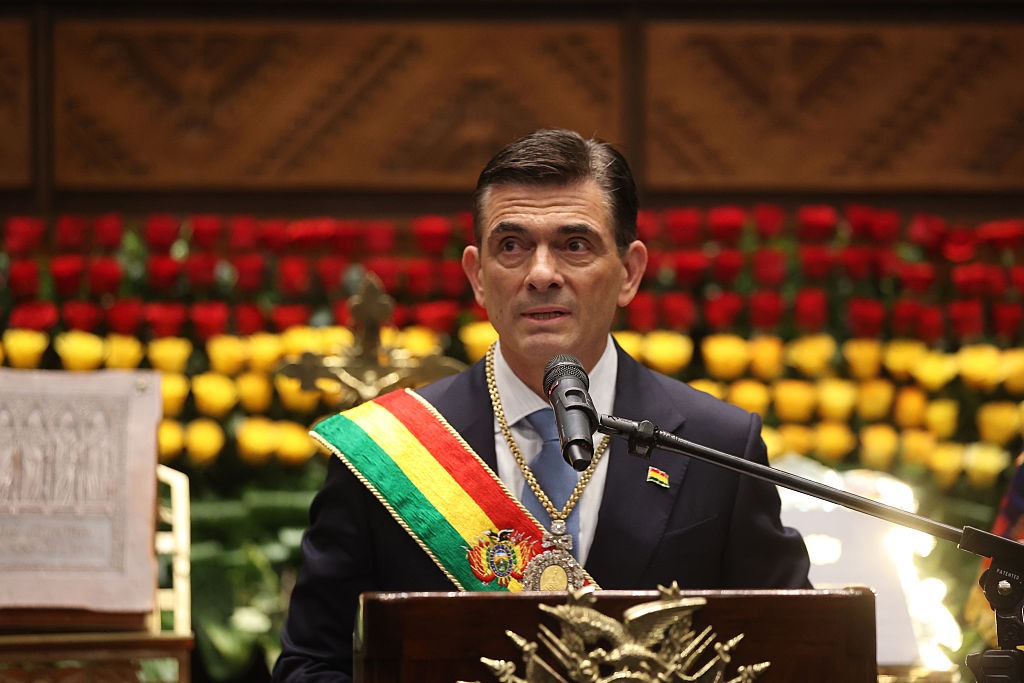
Presidential Decree No. 5460, issued on September 22, 2025, and published in the Official Gazette of the Plurinational State of Bolivia on October 22, 2025, was issued by the then-President of the Plurinational State of Bolivia, Luis Arce Catacora, to grant, regulate the scope of, and establish the requirements for the beneficiaries of this presidential pardon. However, this pardon presents certain differences compared to the Presidential Amnesty and Pardon issued by Presidential Decree No. 5137, published on March 25, 2025, by the same former state authority. The advantages, particularities, and contingencies of this pardon are analyzed below:
Ignoring the amnesty contemplated in Presidential Decree No. 5137 published on March 25, 2025 for humanitarian reasons, the main difference, particularity and advantage lies in the fact that the pardon established by Presidential Decree No. 5460 issued on September 22, 2025, is directed not only to people who at the time of its promulgation and validity were fulfilling a final sentence arising from the commission of a crime that allows opting for this benefit, but is also directed to those people who acquire the sentence and its execution during the validity of the supreme decree, that is to say until October 22, 2026 (1 year); meaning that those persons who are in preventive detention and are still in the investigation phase or oral trial stage, may benefit from this measure if they voluntarily waive the oral and public trial, submit to an abbreviated procedure and obtain a guilty verdict and subsequently acquire its enforceability. We must highlight this aspect, because while it is certainly a way to decongest the prison system, it also serves as an incentive for those who are in the midst of the investigation phase and are being held in pretrial detention. Furthermore, it allows those who have not even been formally charged with a crime to voluntarily submit to the process, opt for an abbreviated procedure, and thus obtain a final and enforceable sentence. The scope of application in Article 2 is clear: “…The pardon shall be applicable to persons deprived of their liberty in the country's penitentiary establishments, who meet the requirements established in this Presidential Decree and who, as of the date of its publication, have a final and enforceable sentence or obtain one during the validity of this regulation…”
Another distinctive feature lies in the individuals to whom this benefit is directed, as Article 4 establishes that those who have committed certain crimes and receive sentences of up to 10 years without serving any part of the sentence may opt for a pardon. This benefit gradually increases, subject to serving part of the sentence; that is, serving one-third of the sentence for 12-year prison terms and half of the sentence for 15- year prison terms. The most attractive option is a 10-year sentence without serving any part of the sentence. This differs from pardons for humanitarian reasons, which, in Article 8, contemplated as the maximum benefit and without requiring serving part of the sentence, crimes with prison terms of up to 8 years, and finally, up to 10 years but subject to serving one-quarter of the sentence.
However, the Presidential Pardon dated September 22, 2025, in article 5, limits its benefit to persons who have committed crimes against the state, persons with more than one criminal process, repeat offenders; persons who have committed genocide, terrorism, murder, parricide, femicide, infanticide, homicide, trafficking in persons, kidnapping; possession, carrying or carrying of non-conventional weapons and illicit trafficking of weapons; financial crimes; aggravated robbery; theft of minerals and smuggling; crimes against sexual freedom (with the exception of the crimes of obscene acts and obscene publications and shows); crimes of homicide and serious and very serious injuries in traffic accidents with the aggravating circumstance of being under the influence of alcohol or narcotics (unless a conciliation agreement is reached with the victim), and finally, crimes involving controlled substances with a sentence exceeding 10 years (those convicted cannot benefit from this program). The crimes listed in Article 1008 highlight one of the differences between the Presidential Pardon of September 22, 2025, and the Presidential Amnesty and Pardon of March 25, 2025, since the latter does not extend its benefits to individuals who have committed crimes covered by the controlled substances regime.
Finally, regarding their requirements, it should be noted that both pardons have similar requirements, detailed respectively in Article 6 of Presidential Decree No. 5460 issued on September 22, 2025 and in Article 10 of Presidential Decree No. 5137 issued on March 25, 2025 (Copy of identity document, copy of the conviction and its execution, copy of the filing of the criminal execution court, certificate of good conduct and permanence) with the marked difference that the pardon of September 22, 2025, requires a certification issued by the Supreme Court of Justice that accredits the details of convictions and current criminal proceedings against the person, as well as the crime or crimes for which they are being prosecuted or convicted; specifying whether the person was granted another pardon or amnesty in the five (5) years prior to the effective date of this Presidential Decree; that unlike the pardon dated March 25, 2025,this certification is requested from the Departmental Court of Justice, simplifying the procedure, since processing this certification before the Supreme Court of Justice involves bureaucratization and delays the prompt access of the convicted to this benefit, arising from the referral of the reference information by the Departmental Courts of Justice to the Supreme Court of Justice, when the procedure could have been simplified by going directly to the departmental jurisdiction as provided by Presidential Decree No. 5137 issued on March 25, 2025.
In summary, the Presidential Pardon established by Presidential Decree No. 5460, issued on September 22, 2025, is much more flexible regarding the scope of crimes, penalties, and application (those convicted and those convicted up to 2026) compared to the Pardon and Amnesty for humanitarian reasons established by Presidential Decree No. 5137, published on March 25, 2025. The exception is the requirement of one of the prerequisites: the certification issued by the Supreme Court of Justice, described in the previous paragraph. This certification may delay the benefit due to the bureaucratic processing involved. Therefore, all potential beneficiaries of this decree are advised to ensure they meet all the requirements before applying for the Presidential Pardon established by Presidential Decree No. 5460, issued on September 22, 2025 to the benefit, avoiding contingencies on the aspects previously discussed.


MSc. Sergio Diaz Gutiérrez
Master in Criminal Law and Criminal Procedure
Contact Us.
Our Networks
Subscribe to our newsletter
Av. Alemana, Calle Los Mapajos No. 2125